Limited Common Elements: Who Pays in a Condo?
Last updated November 5, 2026. General information, not legal or financial advice.
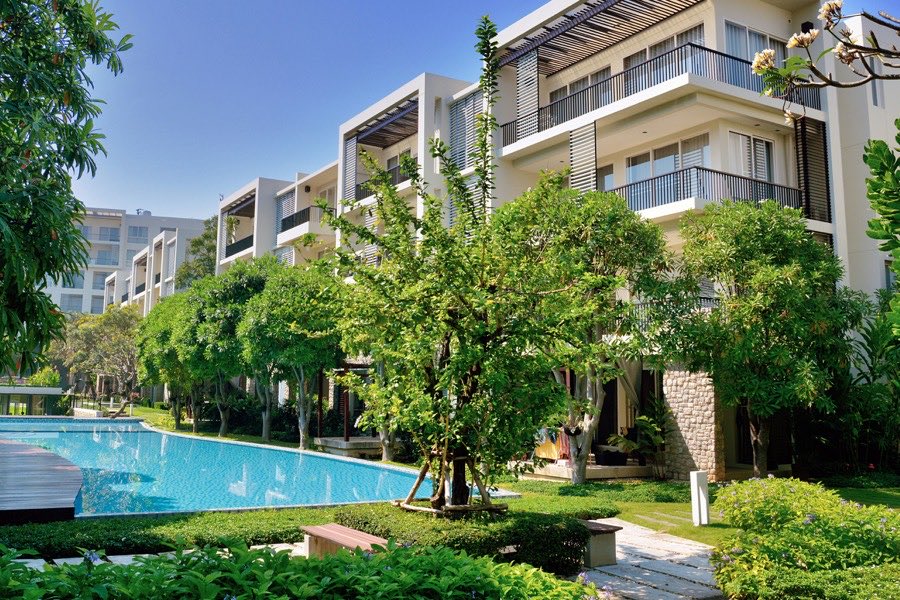
In a condo, owners share walls, roofs and pipes. That makes the first question in any reserve study harder than it sounds: which parts does the association have to fix, and which belong to each owner? Get it wrong and the study either leaves out a big cost or asks every owner to save for something one owner should pay.
Three kinds of space
Most condo documents sort the building into three groups. The names vary by state.
| Category | Typical examples | Who usually pays to replace it |
|---|---|---|
| Unit | Interior finishes, cabinets, fixtures inside the unit | The owner |
| Limited common element | A balcony, patio, parking space or storage locker assigned to one unit | It depends on the documents |
| Common element | Roofs, exterior walls, hallways, shared pipes, grounds | The association |
This table is our own summary of common patterns. Your documents control.
Where the unit ends
The boundary decides a lot. In California, unless the declaration or condominium plan says otherwise, when walls, floors or ceilings are the boundaries, “the interior surfaces of the perimeter walls, floors, ceilings, windows, doors, and outlets” belong to the unit. “Any other portions of the walls, floors, or ceilings are part of the common area.”
So under that default, the paint and drywall face are the owner’s. The rest of the wall is shared. Your plan may draw the line somewhere else.
Limited common elements are the hard part
A balcony used by one owner is a good example. Who keeps it up, and who replaces it, often differ.
- California. Unless the declaration says otherwise, the owner is responsible for “maintaining the exclusive use common area” tied to the unit, and the association “is responsible for repairing and replacing” it. A replacement cost can belong in the study even when day-to-day care doesn’t.
- Florida. Upkeep of common elements is the association’s job, “except for any maintenance responsibility for limited common elements assigned to the unit owner by the declaration.” If the association does the work but bills only the users, the declaration “shall describe in detail the method of apportioning such costs.”
- Oregon. The reserve account “need not include” limited common elements that one or more, but less than all, owners must maintain and replace under the declaration or bylaws.
These are examples from the laws we read, not a full list. Your attorney can confirm how your state and documents treat them.
What it means for the study
A good study shows the result for each item and how it was sorted. Look for these:
- A source for each call. The study should name the section of the declaration it relied on.
- A separate line for shared-cost items. If only some owners pay for an item, it may need its own fund or a note, not a line in the general reserve.
- Open questions in writing. Where the documents are unclear, the study should say so and leave the decision to the board and its attorney.
- Items that cross the line. Pipes and wiring that start in the common area and run into a unit are a common gray area. In California, the association handles some repairs to restore gas, heat, water or electric service that begins in the common area, under Civil Code 4775.
Before the site visit
Have these ready, so the person preparing the study can sort components the first time:
- The declaration and any amendments
- The condominium plan or map
- Any board resolutions on maintenance duties, such as a chart of who maintains what
- Recent repair invoices, which show who has paid for what in practice
See what our condo reserve studies include, or read how to read a condo reserve study once you have one.
Sources
Try your own numbers. Nothing leaves your browser.